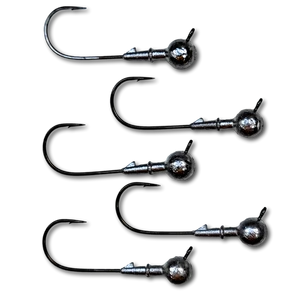







Dougs Custom Lures Wacky Jig Head
$6.99
(No reviews yet)

Write a Review
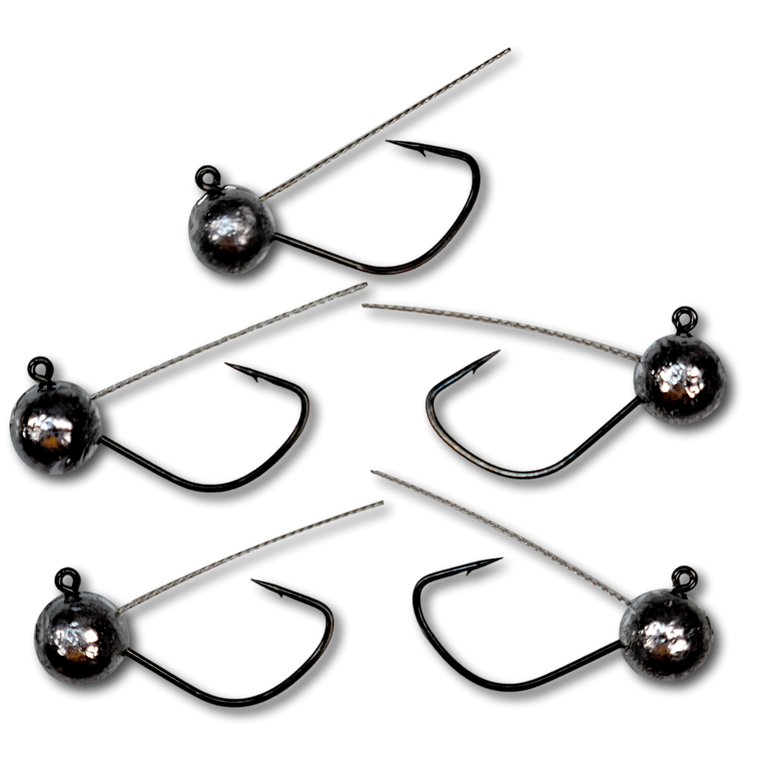
Dougs Custom Lures Wacky Jig Head

Doug's Take
"The wacky rig catches fish everywhere — but a lot of guys are still throwing it on an offset hook and wondering why their bait falls crooked. The weedguard head centers the weight right at the hook, so both ends flutter on the fall instead of one end dragging the other down. I put this on every wacky setup. It's also the only wacky head I've found that you can actually fish in cover without getting hung up every other cast."
— Doug, founder · Doug's Custom Lures · Milwaukee, WI
Built for the Wacky Rig. Five Weights.
The Doug's Custom Lures Wacky Jig Head is a round ball head built specifically for wacky-rigged stick baits. The design difference that makes it work: the weight sits at the hook point, centered in the stick bait, so both ends hang down freely and flutter symmetrically on every cast. A standard offset hook has no weight — and most weighted wacky options load up at the nose of the bait, which throws the fall balance off and makes one end drop faster than the other.
The long-shank wide-gap hook centers in a standard 4–6" stick bait so both ends extend past the bend at equal length. A wire weedguard extends forward from the hook collar, making this head fishable in the dock shadows, laydowns, and shallow cover where wacky rigs do their best work. Natural lead finish — no paint, no eye.
Five weights — 1/16, 3/32, 1/8, 3/16, and 1/4 oz — cover everything from ultra-finesse clear-water drops to big-bait deep presentations. 5 per pack. Made in Milwaukee, Wisconsin.
Centered Weight, Balanced Fall
The weight sits at the hook point, centered in the stick bait. Both ends hang at equal length and fall symmetrically — that balanced flutter on the fall is what triggers strikes. Standard nose-weighted options kill the balance and make one end drop faster than the other.
Long Shank for Proper Hook Position
The long shank sets the hook at the middle of a 4–6" stick bait so both ends extend past the bend at equal length. A short shank shifts the hook toward the nose, kills the balance, and reduces the active flutter on both sides.
Wide-Gap Hook & Wire Weedguard
The wide gap gives both halves of the stick bait room to clear on the hookset. The wire weedguard deflects dock edges, laydowns, and grass without noticeably reducing hook penetration when a bass commits.
Five Weights for Every Depth
1/16 oz for ultra-finesse clear-water drops. 3/32 oz bridges the gap. 1/8 oz is the all-around starting weight for most dock and laydown fishing. 3/16 oz for deeper water and skipping. 1/4 oz for big-bait deep presentations. Weight controls fall speed — get that right first.
- Watch the line, not the rod tip. Wacky strikes happen on the fall and most of them are subtle — a slight jump sideways, the line stopping unexpectedly, or a barely perceptible tick. Keep slack in the line and watch it. Tight line kills the wacky action and masks the bite at the same time.
- Start at 1/8 oz and adjust from there. It's the right weight for most dock and laydown fishing in 4–10 feet. Go lighter in calm, clear, shallow water. Go heavier when fish are deeper than 8–10 feet, wind is pushing slack into your line, or you're skipping under low cover and need the mass for a controlled skip.
- Use an O-ring if you're catching fish. Hooking directly through the plastic works fine — but the bait tears after 2–3 fish. An O-ring keeps the bait intact for 10–15 fish. Hook through the O-ring, not the plastic.
- The weedguard makes this fishable in cover. Cast it into dock shadows, laydowns, and brush piles that a bare hook would snag on every time. The wire deflects most hang-ups without noticeably reducing hook penetration when a bass commits.
- Let it sit longer than feels comfortable. Cast to your target, put the rod down at your side with slack in the line, and count five seconds before you even think about moving it. Most wacky strikes happen before the bait reaches the bottom — that pause is where the fish is.
On-the-water overview (demo copy)
This is placeholder text for Jiggin’ Johnson’s new template shell.
Once we’re happy with the layout and behavior, we’ll plug in real product
descriptions, rigging tips, and JJ-specific language.
Specs & build (demo copy)
Specs & build (demo copy)
Care & storage (demo copy)
Care & storage (demo copy)
Best ways to fish it (demo)
Swim Jig Trailer
Shallow grass, slow roll
Texas Rig
Pitching to cover
Ball Jig Head
Dragging sand or rock
Split Shot
Natural subtle glides