





Dougs Custom Lures Rampage Craw 3.75" Soft Plastic Bait
$6.99
(No reviews yet)

Write a Review

Dougs Custom Lures Rampage Craw 3.75" Soft Plastic Bait

Doug's Take
"The Rampage Craw is my go-to when I'm pitching to heavy cover and need a bait that looks like it belongs there. That claw flare on the fall — bass see a craw in trouble and they eat it. On a jig it bulks the profile exactly right. When I'm in the timber or working grass edges, this is what's on the hook."
— Doug, founder · Doug's Custom Lures · Milwaukee, WI
Built For Heavy Cover. Five Ways To Work It.
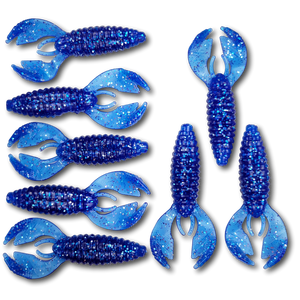
The Doug's Custom Lures 3.75" Rampage Craw is a cover bait and jig trailer built around one thing: the action that triggers bass in heavy structure. Its ribbed body displaces water on every move, and those large flat claws flare and flutter on the fall — the defensive posture that tells a bass this craw is right where they want it.
Pair it with an arky or flipping jig and it becomes a full package — the compact chunky profile bulks the jig to the right size while the claws thump on every pull and settle into a craw-up posture on bottom. On a Texas rig or punch rig, it drives through dense cover and drops straight to where the fish are sitting.
Pitch it tight, let it fall, and read the line. Bass in cover don't chase — they commit the second it hits the zone.
Pitching to Cover
Short, accurate pitches to laydowns, dock pilings, and grass edges. Let it pendulum on the fall — that's when the claws flare and most strikes happen. Keep your line semi-tight and watch for any jump or twitch.
Dragging Structure
On a football jig over rock points and hard-bottom transitions, use slow 6–12" pulls with long pauses. The claws thump on the drag and spread wide on the settle — the pause triggers the eat.
Punching Mats
Pair it with 1–1.5 oz of tungsten and drop straight through matted vegetation. Pop the rod once to clear strands, then let it fall completely — the majority of bites come on that initial drop after the punch-through.
- Read the pendulum fall. After the pitch lands, keep just enough tension to track the line — don't pull it. Let the bait swing naturally to the base of the cover. That swinging descent is when bass intercept it.
- Hop or shake — don't drag. Once it's on the bottom, two or three short hops to flare the claws is more effective than dragging. Dragging moves the bait away from cover. Hops keep it in the strike zone.
- Check your claws before the cast. Bent or compressed claws won't flare right. If a claw got mashed in the bag, roll it between your fingers to reset it before pitching — the action difference is real.
- Hookset timing in heavy cover. Bass in timber and mats eat and go. The moment you feel weight, sweep the rod hard to the side — don't wait for a pull. You have one second before they're wrapped in something.
- Trim the claws for a faster fall. In deep water or strong current, trimming the tips of the claws speeds up the drop and keeps the bait on the bottom longer. Leave them full on shallow pitches where the slower flutter is what you want.
On-the-water overview (demo copy)
This is placeholder text for Jiggin’ Johnson’s new template shell.
Once we’re happy with the layout and behavior, we’ll plug in real product
descriptions, rigging tips, and JJ-specific language.
Specs & build (demo copy)
Specs & build (demo copy)
Care & storage (demo copy)
Care & storage (demo copy)
Best ways to fish it (demo)
Swim Jig Trailer
Shallow grass, slow roll
Texas Rig
Pitching to cover
Ball Jig Head
Dragging sand or rock
Split Shot
Natural subtle glides