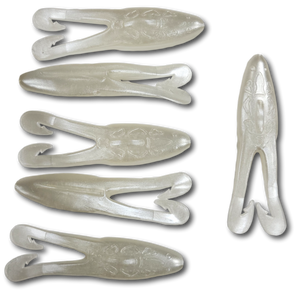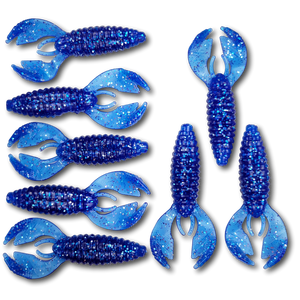





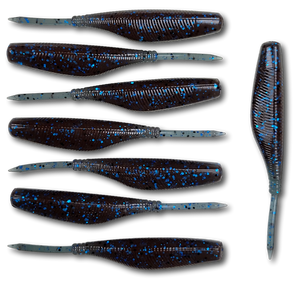

Dougs Custom Lures 4" inch Soft Plastic Tube Baits
$7.99
(No reviews yet)

Write a Review

Dougs Custom Lures 4" inch Soft Plastic Tube Baits

Doug's Take
"The tube bait is one of those baits that never goes out of style. It's been catching bass for decades because nothing else falls like it. That spiral glide on the way down — the tentacles fluttering the whole time — it looks exactly like a crayfish or baitfish trying to escape. I fish it under docks, over rock, in deep clear water. It's always in my box."
— Doug, founder · Doug's Custom Lures · Milwaukee, WI
Built For The Fall. Five Ways To Rig It.
The Doug's Custom Lures 4" Soft Plastic Tube Bait is built around one thing: fall action. The hollow body and multi-strand tentacle skirt produce a spiraling, gliding descent that no solid-body bait can replicate — the tentacles flutter and collapse the entire way down, exactly like a crayfish or baitfish scrambling to get away.
It's a finesse bait first — built for dock skipping, dragging rock and hard bottom, and clear-water presentations where bass get a long look and refuse anything that doesn't look completely right. The four-inch profile is the sweet spot: big enough to draw a committed bite, compact enough to fish on spinning gear in tough conditions.
Rig it on an internal tube head, skip it under docks on an external ball head, or flip it into cover on a Texas rig. Five proven setups. One bait that bass have been committing to for decades.
Skipping Docks
The tube skips flat and far on spinning gear. Get it under low-hanging docks and overhangs — that's the dead zone other baits never reach, and bass sit there waiting all day.
Dragging Structure
On a tube head, drag it slowly along rock piles, gravel points, and hard bottom. The tentacles tick the bottom and flutter on every pause — it looks exactly like a crayfish feeding or trying to escape.
Finesse Fall
Cast it, let it fall on a semi-slack line, and watch. The spiral descent and fluttering tentacles draw strikes before the bait ever touches bottom — especially in clear water where bass are watching from a distance.
- Read the spiral fall. When the tube lands, let it drop on semi-slack line — that slow, corkscrew descent is the action fish react to. If you're reeling the second it hits water, you're missing most of your bites.
- Skip presentation matters more than most anglers realize. A low-angle skip keeps the tube flat and gets it deep under docks. High arcs kill the skip — practice a sidearm cast with light spinning gear and you'll cover dock water nobody else is fishing.
- Internal head vs. external head changes the whole presentation. Internal keeps the profile compact and natural — better for skipping and clear-water finesse. External gives you a faster fall rate and slightly higher hook-up ratio on open structure where you need positive contact.
- The tentacles do the work on the pause. When you stop moving the bait, every strand settles and shimmies on its own. Don't rush it — the most important part of the retrieve is when you're not doing anything.
- Hookset timing on the glide. Bites on a falling tube are usually subtle — a slight tick or your line moving sideways. Don't wait for the rod to load. Set on anything that feels wrong and you'll convert far more fish.
On-the-water overview (demo copy)
This is placeholder text for Jiggin’ Johnson’s new template shell.
Once we’re happy with the layout and behavior, we’ll plug in real product
descriptions, rigging tips, and JJ-specific language.
Specs & build (demo copy)
Specs & build (demo copy)
Care & storage (demo copy)
Care & storage (demo copy)
Best ways to fish it (demo)
Swim Jig Trailer
Shallow grass, slow roll
Texas Rig
Pitching to cover
Ball Jig Head
Dragging sand or rock
Split Shot
Natural subtle glides