

Cold Front &
High Pressure
A cold front doesn't mean the fish stop biting — it means you have to commit to one of two completely opposite approaches. Doug breaks down when to go small and slow versus when to go big and fast, and why doing both at once is the mistake most anglers make.

- Fish are visible but won't commit
- Clear, calm water after the front passes
- Dock fish that have moved to tighter cover
- Everybody else is fishing shallow — go deep
- Front blew through fast, water still active
- Fish are still moving but ignoring finesse
- Stained water — they can't see the small stuff
- You want one big bite, not numbers
Go Small & Natural
Slow down, downsize, and put the bait somewhere nobody else is reaching. The tightest cover, the deepest part of the dock, or out on structure in open water — wherever fish have pulled back to, you need to bring the bait to them.
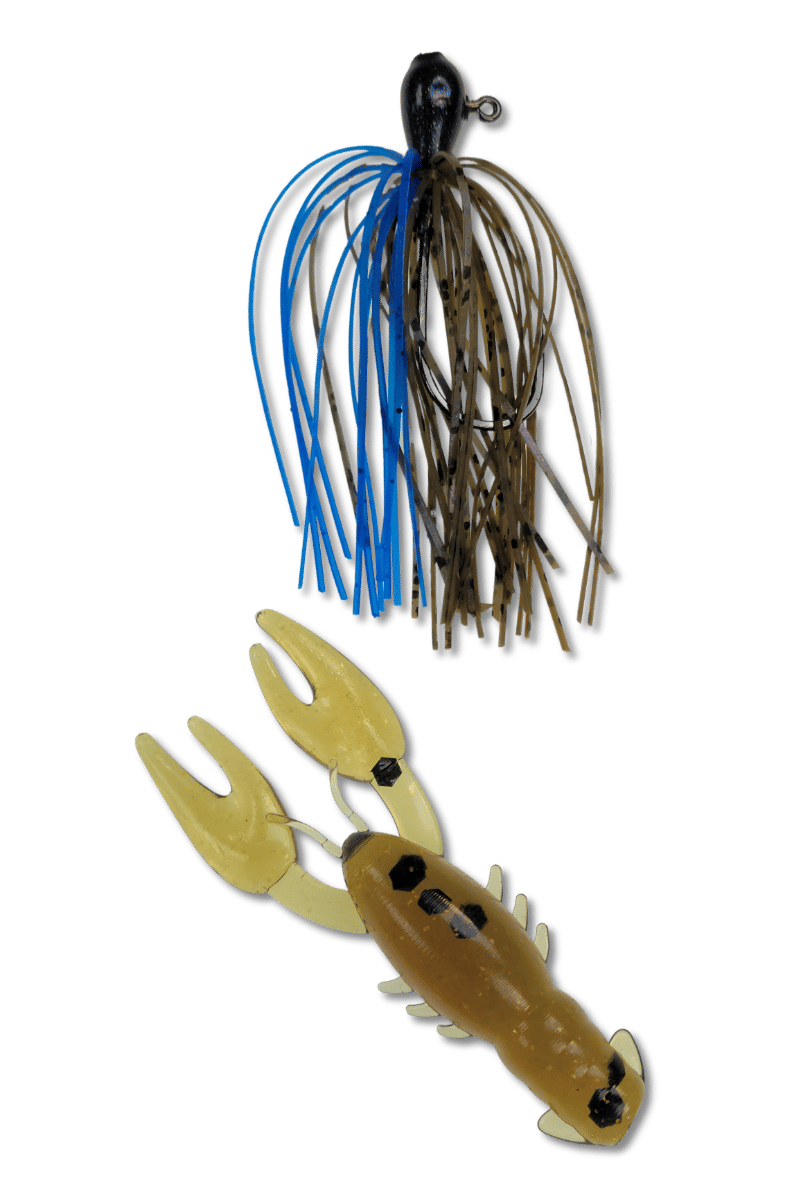
Skip it as far back under dock structure as you can and let it die on the fall. No added movement — the Ned Craw's claws flutter on the drop and that's all the action you need. Front fish want natural and subtle. Give them slack line and time. Most bites are barely a tick on the fall or a slight heaviness when you pick up.
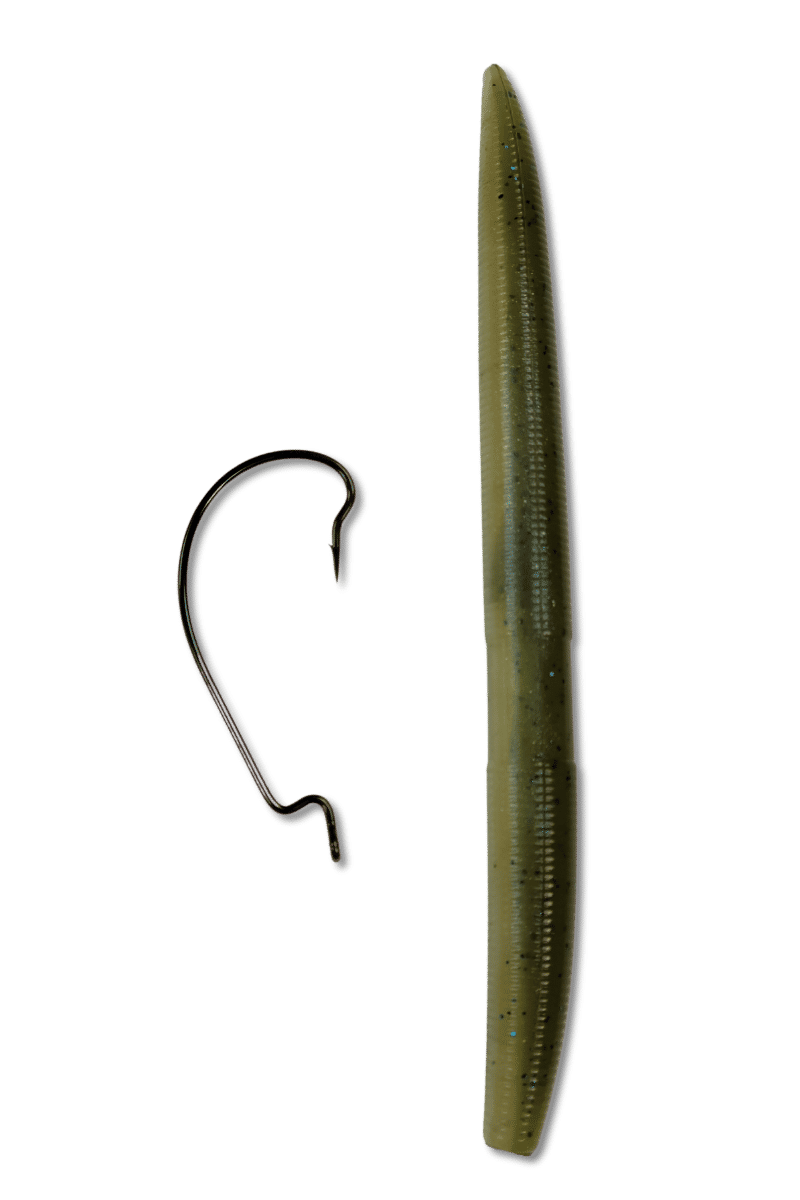
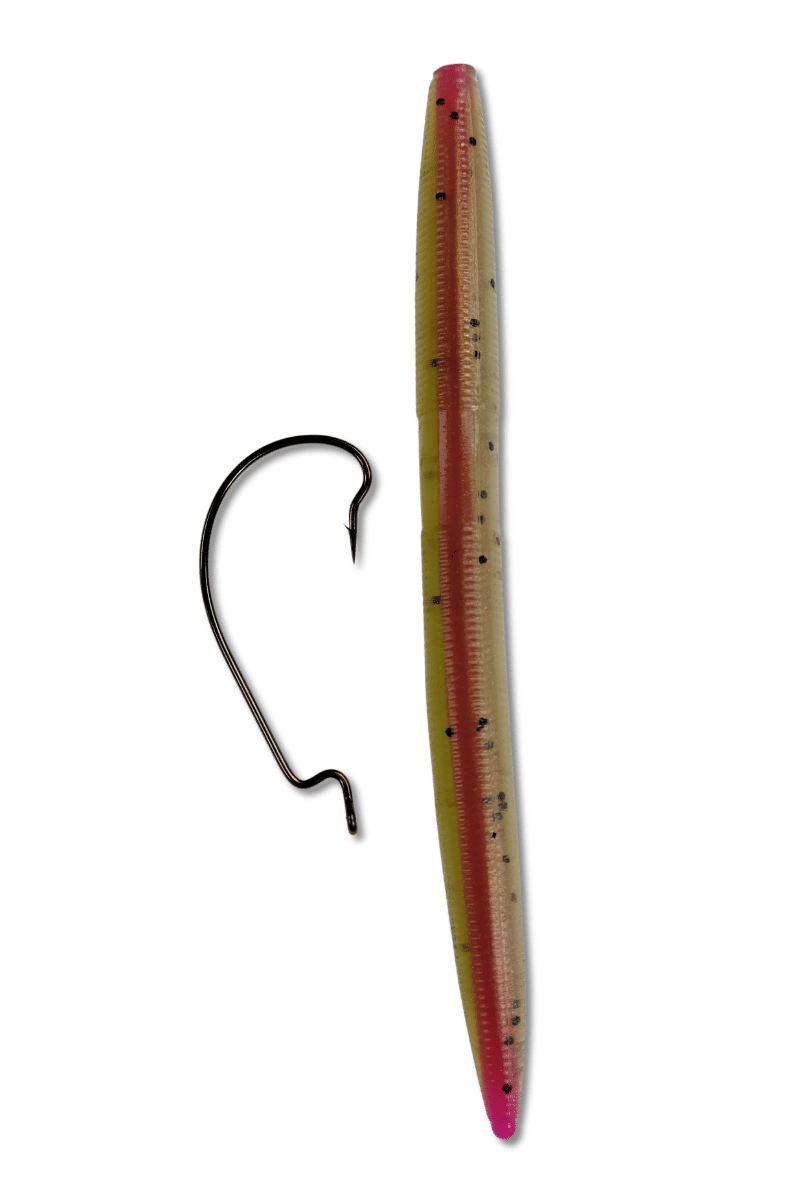
Cast it out and force yourself to count to five before you touch the rod. After a cold front bass are lethargic — they won't chase, but they'll pick up something that falls right in front of them. Weightless is the slowest fall you can get; Neko stands it up nose-down on the bottom and lets it sit there quivering. Both work. Both require patience.
When fish pull off shallow banks after a front, they don't go far — they stack on the nearest deep break or hard bottom. Drag this slowly along the bottom and let the weight do the work while the stickbait floats freely behind it. Long leader is key: the more separation you give the bait from that heavy sinker, the more natural it acts. Fish it slower than feels right.
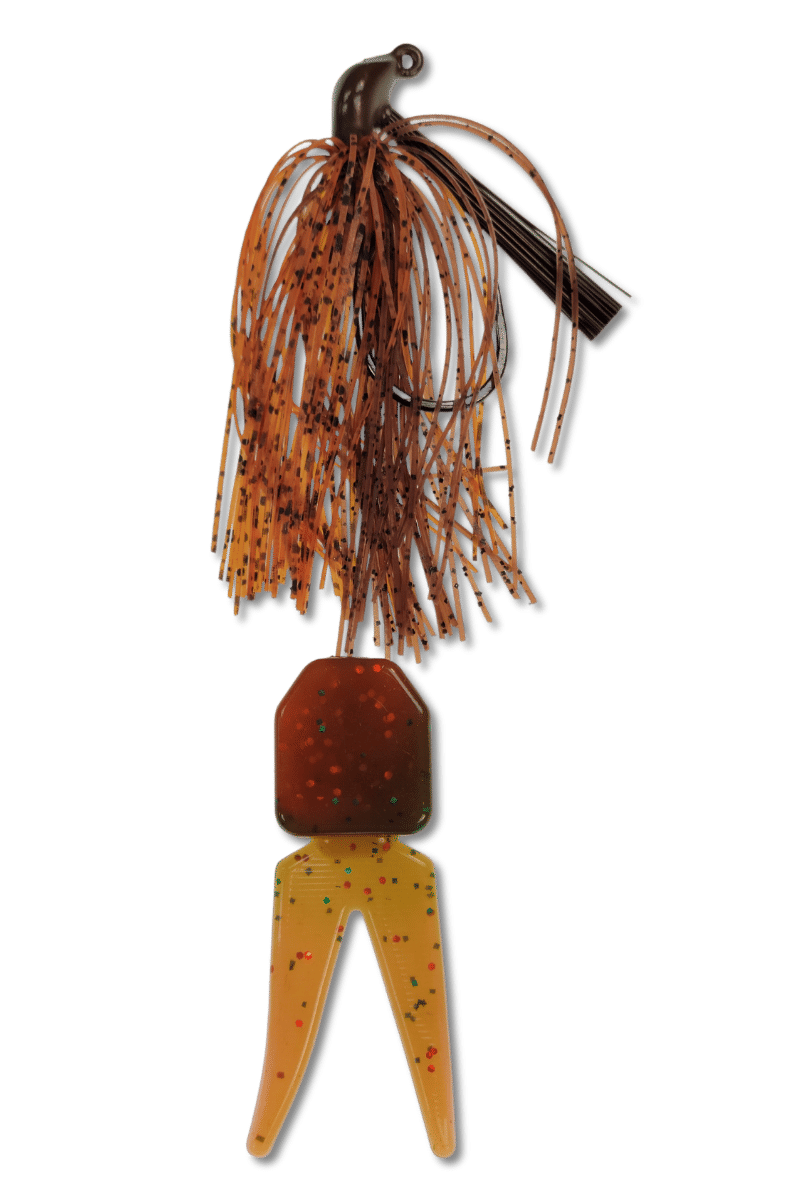
Cold front fish compact tight — they don't want to chase and they don't want to chew on something big. The OG Chunk keeps the profile small while still giving the jig enough body to get noticed. Pitch it to the tightest cover you can find — the back of docks, fallen timber, laydown logs. Let it hit the bottom and then drag it slowly, no hops. The bites are soft.
Go Big & Loud
Not every cold front shuts fish down completely. Sometimes they're still willing — they just won't chase a small bait. Fish fast, make noise, and force a reaction. This is not a finesse game. The goal is one triggered bite from a fish that didn't plan on eating.
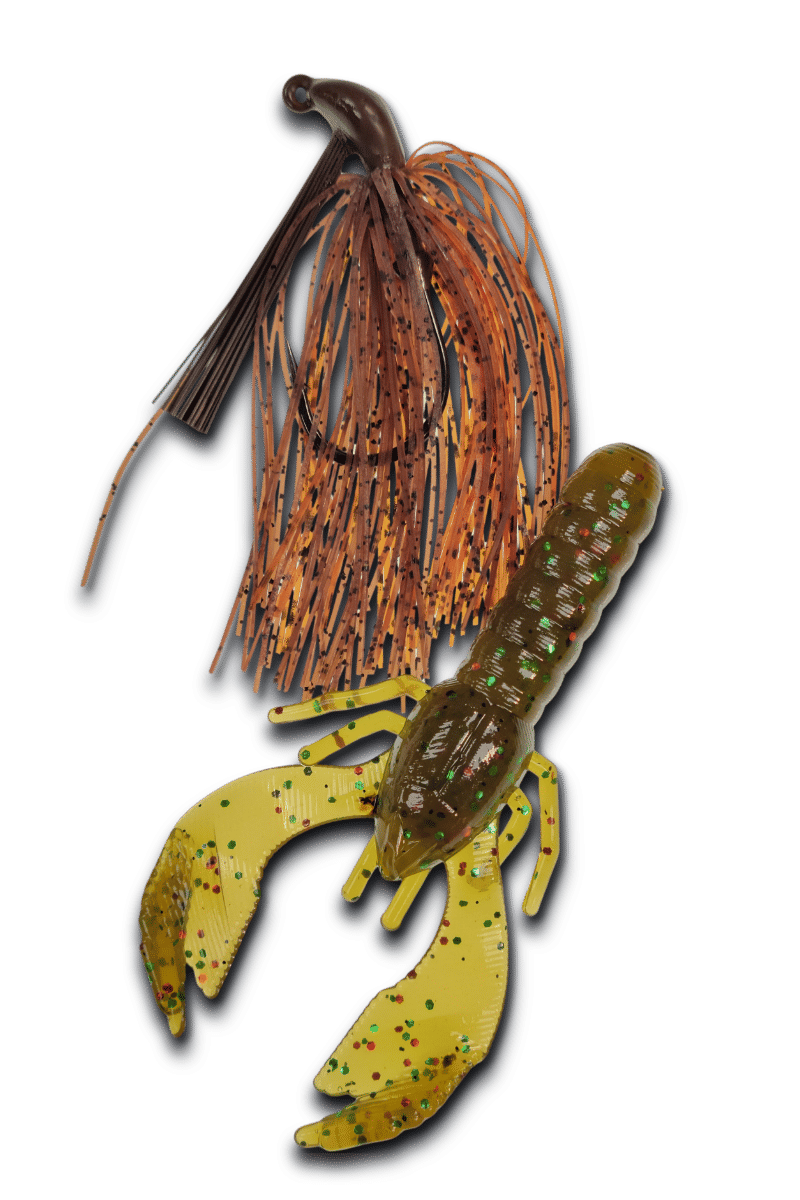
Pitch to hard cover and let it fall fast — that falling profile is your best strike trigger. If you don't get bit on the fall, drag it out quickly and make your next pitch. You're covering water and provoking a reaction, not coaxing a finesse bite. Loud color matters here: black and blue, black and red, anything with contrast that a bass can find and react to without thinking.
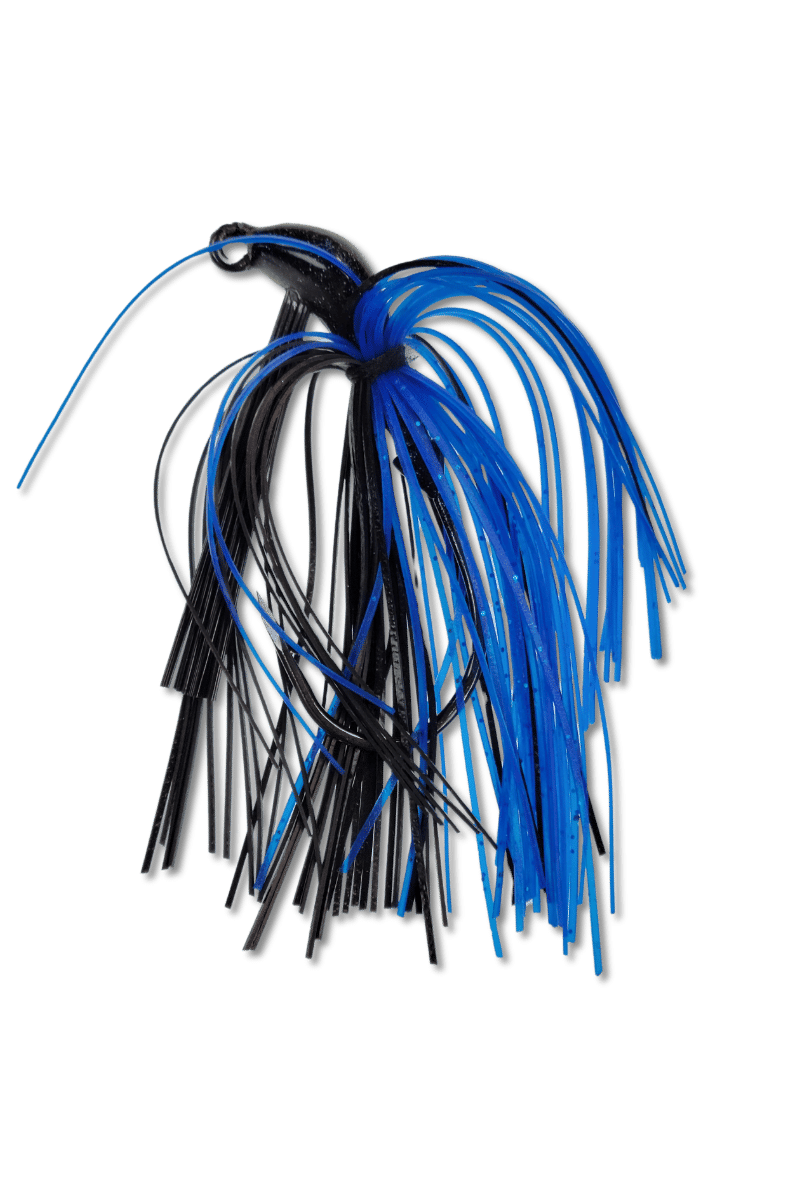
Stained water after a front is one of the best scenarios for this rig — reduced visibility means fish are relying on lateral line and profile, not a long visual inspection. Fish can't scrutinize the bait. Cover water fast, hit every piece of hard cover along the bank, and set the hook hard on any load-up. Don't hesitate. Heavy braid keeps you in control through cover.